Dry Brine vs. Wet Brine: The Science of Seasoning for Turkey and Pork
Dry brine vs wet brine is one of the biggest questions during holiday turkey season and weekend pork roasts. This guide explains the science behind both methods, when to use each, and step-by-step timing for juicy, flavorful turkey and pork. We will also share tips from the team at Wilson Farm Meats in Elkhorn, Wisconsin, where high-quality, locally raised meats meet a tradition of care and craftsmanship.
What Brining Really Does
Brining helps you season the inside of meat, not just the surface. It also helps meat hold on to moisture as it cooks. That is why a well-brined turkey breast stays juicy and a brined pork chop stays tender even on a hot grill.
The Salt Science
Salt is the engine of any brine. Salt first draws out a little moisture, then dissolves into that liquid and moves back into the meat. Inside the muscle, salt changes the way proteins connect, so they hold on to more water. The result is meat that loses less juice while cooking and tastes seasoned from edge to center.
Water and Moisture Balance
Wet brining soaks meat in a salted water solution. That extra water can help meat seem plumper. Dry brining uses only salt and seasonings on the surface. The meat makes its own brine as the salt pulls out moisture, then that liquid gets reabsorbed. Dry brining concentrates flavor and does not add water weight. Both routes aim for the same goal: well-seasoned, moist meat.
Flavor Carrying and Texture
Spices and herbs do not travel deep into meat like salt does, but they perfume the surface and outer layer. Sugar softens edge saltiness and enhances browning. Dry brining usually gives crisper turkey skin because there is no water bath. Wet brining can give a silkier bite and a gentle cure-like savor, which many people love with pork loin and chops.
Dry Brine vs Wet Brine at a Glance
What Is a Dry Brine
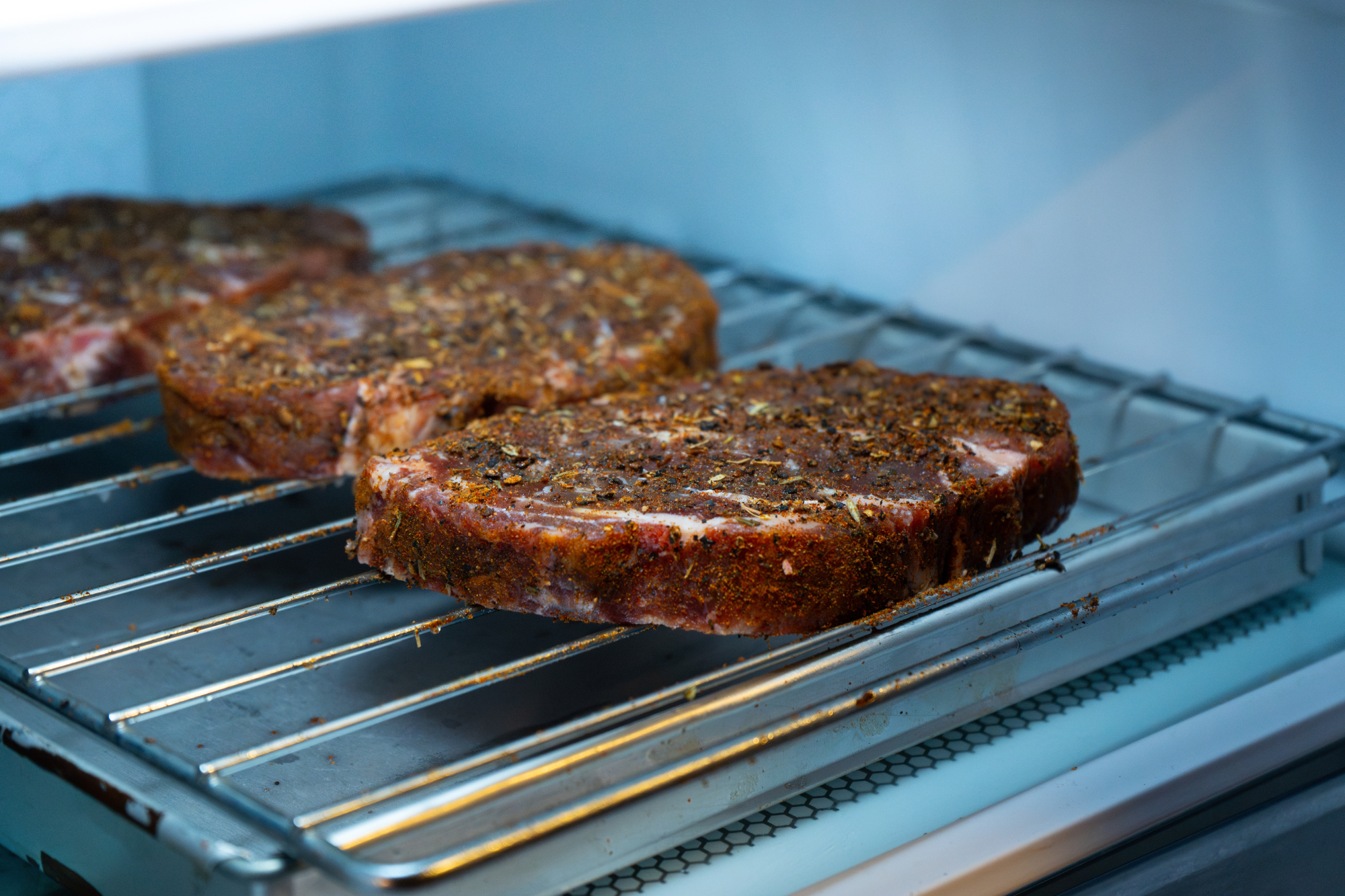
A dry brine is simply salt plus optional sugar and spices rubbed on the meat. Time in the fridge does the work. No large bucket or heavy bag needed. Many cooks prefer dry brining because it is clean, simple, and delivers a crisp exterior, especially on turkey.
- Best for: Whole turkey, turkey breast, pork chops, pork loin roast
- Pros: Crisp skin, deep flavor, easy storage in the fridge, no large liquid needed
- Cons: Slightly less margin for error on very lean meat, careful measuring needed
What Is a Wet Brine
A wet brine is a saltwater bath that the meat rests in for several hours. The water carries salt and a little sugar into the outer layers. Wet brines are forgiving for lean cuts and can deliver remarkable juiciness.
- Best for: Very lean turkey, turkey breast, pork loin, pork chops, smoked pork roasts
- Pros: High moisture retention, gentle seasoning, helpful for long cooks
- Cons: Needs a big container and fridge space, can soften skin, more cleanup
How to Choose: Dry Brine vs Wet Brine
Choose Dry Brine If
- You want the crispiest turkey skin possible
- You have limited fridge space and want less mess
- You are cooking heritage pork from a local farm, which already has flavor and good marbling
- You prefer a bold, concentrated, roast-forward taste
Choose Wet Brine If
- Your turkey or pork is very lean
- You plan to smoke or cook low and slow and want extra moisture insurance
- You like a tender, silky bite and mild cure-like savor
- You are cooking thinner chops that can dry out fast
Salt Ratios and Timing for Turkey and Pork
Dry Brine Ratios
Use 1/2 to 3/4 teaspoon fine sea salt per pound of meat. If using a coarse kosher salt, aim for 3/4 to 1 teaspoon per pound to account for larger crystals. For even better accuracy, weigh your salt at about 1 percent of the meat’s weight. If you want a touch of sweetness, add sugar at half the salt amount. Add herbs and spices to taste.
Wet Brine Ratios
A simple starting point is a 5 to 6 percent salt solution. That is 50 to 60 grams of salt per liter of water. If measuring by volume, aim for 1/4 cup of a light kosher salt or about 3 tablespoons of a denser kosher salt per quart of water. Add sugar at half the salt by weight for balanced flavor. For a classic profile, include peppercorns, bay leaves, garlic, and citrus peels. Always cool the brine fully before adding meat.
Timing Guide for Turkey
- Whole turkey 10 to 14 pounds: Dry brine 36 to 48 hours. Wet brine 12 to 24 hours.
- Whole turkey 15 to 20 pounds: Dry brine 48 to 72 hours. Wet brine 18 to 36 hours.
- Turkey breast, bone-in: Dry brine 24 to 36 hours. Wet brine 8 to 12 hours.
Timing Guide for Pork
- Pork chops, 1 inch thick: Dry brine 8 to 24 hours. Wet brine 4 to 8 hours.
- Pork loin roast: Dry brine 12 to 24 hours. Wet brine 8 to 12 hours.
- Pork shoulder for smoking: Dry brine 24 to 48 hours. Wet brine 12 to 24 hours.
Step-by-Step: Dry Brining
- Measure salt. Use 1/2 to 3/4 teaspoon fine salt per pound of meat. Adjust for kosher salt as needed.
- Pat dry. Remove surface moisture with paper towels.
- Season evenly. Sprinkle salt and any spices under the skin where possible on turkey. For pork, coat all sides.
- Refrigerate uncovered on a rack. The cold air helps the surface dry for better browning. Time it using the guide above.
- Before cooking. Do not rinse. Pat the surface dry. Rub with a small amount of oil or softened butter. Roast, grill, or smoke as planned.
Step-by-Step: Wet Brining
- Mix the brine. Use 50 to 60 grams of salt per liter of water. Add sugar and aromatics.
- Chill fully. The brine should be fridge cold before meat goes in.
- Submerge. Use a nonreactive container or brining bag. Keep the meat fully covered.
- Refrigerate for the recommended time. Keep the brine cold at all times.
- Rinse briefly and dry. Rinse under cool water for a few seconds, then pat very dry. For turkey, air-dry on a rack in the fridge for 6 to 24 hours to improve skin crispness.
Flavor Add-Ins for Turkey and Pork
Turkey Dry Brine Ideas
- Lemon zest, cracked black pepper, thyme, and rosemary
- Smoked paprika, orange zest, and garlic powder
- Sage, marjoram, and a touch of brown sugar
Turkey Wet Brine Aromatics
- Bay leaves, peppercorns, garlic cloves, and citrus peels
- Apple cider, allspice, and fresh thyme
- Star anise, ginger slices, and orange peel for a light holiday note
Pork Dry Brine Ideas
- Brown sugar, cracked pepper, and fennel seed
- Garlic powder, paprika, and mustard powder
- Coriander, cumin, and a pinch of chili flake
Pork Wet Brine Aromatics
- Bay, juniper berries, and thyme
- Crushed garlic, black pepper, and orange peel
- Maple syrup or honey with rosemary for a sweet-savory balance
Cooking Tips After Brining
- Let meat rest at room temperature for 30 to 45 minutes before it goes into the oven or onto the grill. This helps even cooking.
- Cook to temperature, not just time. Turkey breast and whole turkey are best pulled at 155 to 160 F in the breast and 170 to 175 F in the thigh, then rested. Pork chops and pork loin are tender and safe at 145 F, then rested for 3 to 5 minutes.
- For the crispiest turkey skin, make sure the surface is very dry and start in a hot oven before lowering the heat, or finish with a high-heat blast.
- For pork, a quick sear at the end adds color and flavor. Rest the meat so juices redistribute.
Common Mistakes and Easy Fixes
- Over-salting: Measure your salt and remember that different salts vary. When in doubt, use a little less and season more after cooking.
- Brining enhanced meat: Skip brining if the package says it already contains a solution. It can become too salty.
- Not keeping it cold: Always brine in the fridge. Use ice in the wet brine if needed to hold temp.
- Skipping the dry step: Wet-brined meats should be dried well before cooking. For turkey, air-dry in the fridge for better skin.
- Rinsing a dry brine: Do not rinse a dry brine. You will wash off flavor and add excess moisture to the surface.
Special Notes for Smoking Turkey and Pork
When smoking, a wet brine can offer extra protection during the longer cook. A dry brine still works well if you keep your temperatures steady and do not overcook. For pork shoulder, a dry brine longer than 24 hours seasons deeply without the bag and bucket. For turkey, a short wet brine followed by an overnight uncovered rest gives you both juiciness and crisp skin.
FAQs About Dry Brine vs Wet Brine
Can I brine a frozen turkey or pork roast
Thaw safely in the fridge. You can start a dry brine when the surface is thawed enough to hold salt, even if the center is still icy. The lead time helps seasoning reach deeper as the meat finishes thawing.
Do I need sugar in my brine
No, but it helps balance salt and boosts browning. Sugar is especially nice with pork. Use about half as much sugar as salt by weight in a wet brine, or a light sprinkle in a dry brine.
Should I rinse after brining
After a wet brine, a quick rinse is helpful. After a dry brine, do not rinse. Just pat dry.
Can I stuff a brined turkey
It is better not to. Stuffing slows down cooking and can become too salty. Cook stuffing in a separate dish for better texture and food safety.
How long should I air-dry for crisp skin
Six to 24 hours uncovered in the fridge works well for turkey, whether you dry brined or wet brined. The drier the surface, the crisper the skin.
Why Wilson Farm Meats Customers Care About Brining
At Wilson Farm Meats, brining is part of the conversation every fall and throughout grilling season. The Wilson family has been part of the Elkhorn community for over 150 years, and their focus is simple. They want you to bring home quality meats and cook them with confidence. Their heritage-breed pork from Wilson Prairie View Farms in Walworth County has rich flavor and good marbling, so a dry brine works beautifully for chops and roasts. If you prefer the silky texture of a wet brine for pork loin or want extra insurance for a smoked roast, they can guide you on ratios and timing.
For turkey, the staff can help you decide between dry brine vs wet brine based on your oven, schedule, and taste. If crisp, burnished skin is your dream, they may suggest a dry brine with an overnight uncovered chill. If you plan to carve a large breast and worry about dryness, they can recommend a short wet brine and a gentle roast. That is the benefit of a family-run shop. You get real advice from people who cook and care.
What You Will Find at Wilson Farm Meats
- Pork: Heritage-breed pork raised locally, prized for flavor and tenderness.
- Beef: Locally raised beef, custom cut to your preferences.
- Poultry and Seafood: A curated selection to fit your menu and season.
- Specialty Smoked Meats: Bacon, ham, bratwurst, wieners, summer sausage, liver sausage, and ring bologna. All processed in their Elkhorn facility.
- Custom Processing: Bring in locally raised beef, pork, lamb, or veal for processing with special orders welcome.
- Specials and Events: Weekly specials, value boxes, and their Yearly Pig Sale help you stock the freezer at a great value.
Visit the Elkhorn Store
Wilson Farm Meats welcomes you to their store at 406 S. Wisconsin Street, Elkhorn, WI 53121. Hours are Monday to Friday 8:00 am to 5:00 pm and Saturday 8:00 am to 2:00 pm. Stop in for friendly guidance, custom cuts, and the fresh, local selection that makes farm-to-table more than a buzzword. Learn more about their offerings at WILSONFARMMEATS.COM or ask the team in store about brining, cuts, and cooking tips tailored to your kitchen.
Sample Plans You Can Use This Week
Dry-Brined Turkey Plan
- Two days ahead: Dry brine a 12 to 14 pound turkey with 1/2 to 3/4 teaspoon fine salt per pound mixed with lemon zest, thyme, and pepper. Get salt under the skin where possible.
- One day ahead: Leave the turkey uncovered in the fridge for better skin.
- Roast day: Pat dry, rub with a little oil or butter, and roast to 160 F in the breast. Rest 20 to 30 minutes before carving.
Wet-Brined Pork Loin Plan
- Night before: Make a 5 to 6 percent salt brine with a little sugar, bay, garlic, and orange peel. Chill fully. Submerge the pork loin and refrigerate 8 to 12 hours.
- Morning: Rinse briefly and dry well. Rest uncovered in the fridge to dry the surface.
- Dinnertime: Roast to 145 F, then rest 10 minutes. Finish with a quick sear if you want extra color.
Final Take: Dry Brine vs Wet Brine
There is no one best way for every cut and every cook. Dry brining is simple, clean, and perfect for crisp turkey skin and flavorful pork from a quality source. Wet brining brings gentle seasoning and extra moisture to lean cuts and long cooks. Think about your cut, your fridge space, and your taste. If you want guidance, the team at Wilson Farm Meats is here to help.
Stop In and Talk Brining With Us
Whether you are roasting your first turkey or perfecting your weekend pork chops, start with great meat and a plan that fits your style. Visit Wilson Farm Meats in Elkhorn to pick out your turkey, pork chops, pork loin, or smoked specialties. Ask about dry brine vs wet brine, timing for your exact cut, and seasoning ideas that match your menu. With a friendly team, custom cutting, and a proud tradition in Walworth County, Wilson Farm Meats makes it easy to cook with confidence and serve something delicious at your table.